The Holy Apostolic See
|
|||||||||||||||||
| The
Holy Apostolic See of the United Roman-Ruthenian Church is the true
visible Orthodox head of all Latin Christians, in addition to all
others under her sacred mantle of care. The Church serves as the
Orthodox Old Catholic jurisdiction for the historic lands of the
Western Patriarchate and Holy Rus’. We are the Eastern Roman Church with Latin heritage, the continuation of the Apostolic faith where East and West meet. Our mission is to preserve and renew the Orthodox-Catholic faith in its full inheritance. Read more at this article and this article. |
The United Roman-Ruthenian Church is not a new creation, but a contemporary expression of an ancient Apostolic inheritance. Its official timeline begins with the founding of the Church in AD 33, and its authority derives from preserved Apostolic succession received through the ancient patriarchates of Rome, Constantinople, Antioch, Jerusalem, and their historic extensions into Rus’ and the Americas. The URRC is a derivative patriarchate formed by the convergence of these ancient lines, united not by innovation but by continuity of faith, order, and sacramental life. Its various constituent jurisdictions merged in 2023 to form the modern United Roman-Ruthenian Church.
The Holy Apostolic See of the United Roman-Ruthenian Church is under the patronage of Saints Peter, Andrew, Stephen, and Mark, reflecting both its Eastern and Western inheritance: Peter as patron of Rome, Andrew as apostle of the East and of Ruthenia, Stephen as patron of the Diocese of Rome-Ruthenia, the main episcopal jurisdiction of the Roman-Ruthenian Pope, and Mark as founder of Aquileia and patron of the papal Metropolitan See. Through Apostolic succession, ecclesial grants, and formal recognitions received over time, the URRC inherited not only orders but jurisdiction, autocephaly, and custodial responsibility for the Petrine inheritance within the Latin Orthodox tradition. Its present form represents consolidation rather than invention: a gathering of ancient streams into a single custodial Church, preserving intact what was received.
Where is the Church located?
Find out here.
| MAIN PORTAL | SUPREME PONTIFF | |
| Key Readings |
History | |
| Government | Apostolic Household | |
| Pontifical Court |
|
|
| Historical
Timeline |
Liturgy | |
| Patriarchal Succession | Contact |
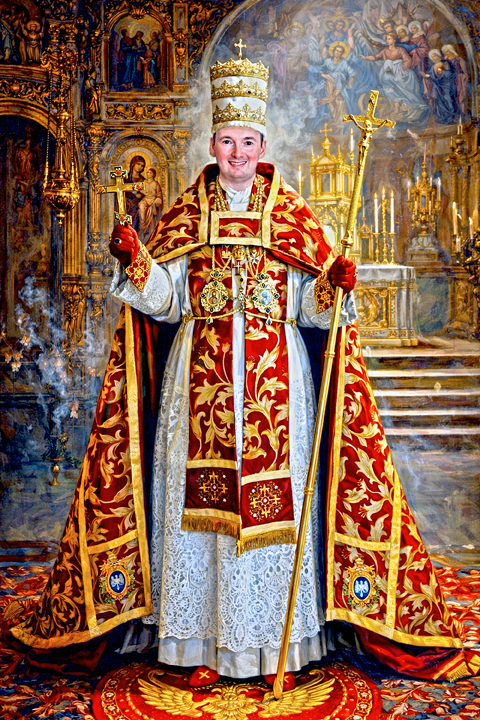
Online Gallery of Pontifical Regalia
Most Holy Patriarchal Basilica of Santa Maria Antiqua
Historic First Chair of the Holy Apostolic See
The Custodian of Apostolic Continuity and Orthodox-Catholic Unity
The United Roman-Ruthenian
Church and Pontifical Imperial State is a sovereign, autocephalous
patriarchal Church rooted in both Orthodox and Catholic tradition.
Emerging as a derivative patriarchate of Rome, Russia, Greece, and
America, it is an Eastern Roman Church with Latin heritage. The Church
stands not only as a symbol of ecclesial unity but as the rightful
temporal successor to St. Peter and spiritual successor to Pope St. Leo
X.
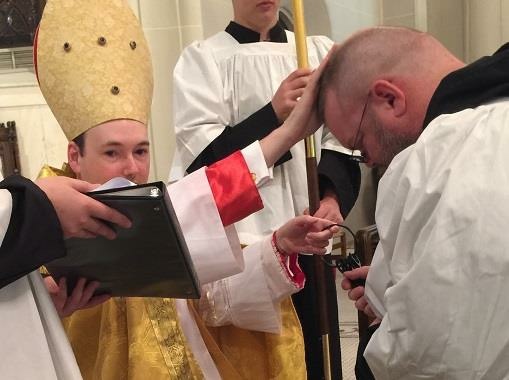
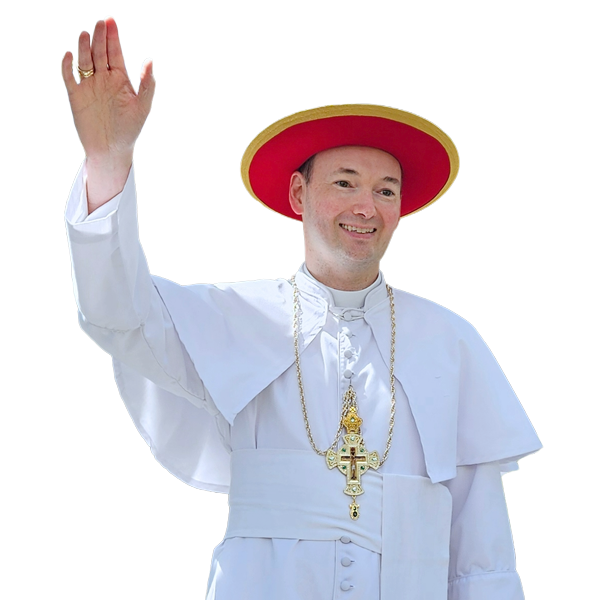
Declared by ecclesiastical decree and divine providence, the Roman-Ruthenian Pope-Catholicos, Radislav I, was quietly confirmed in 2014 as coadjutor to the Roman Pope by the Cardinal Dean, entrusted with full papal authority in the jurisdiction of the United Roman-Ruthenian Church. The results of this act slowly began to be revealed to the public in 2020. That confirmation was brought to full completion following the death of Pope Francis on 21 April 2025, the traditional founding date of Rome and the very day on which Radislav had been sacramentally confirmed into the Roman Church decades earlier. The convergence of these dates is not coincidence, but a divinely providential realignment.
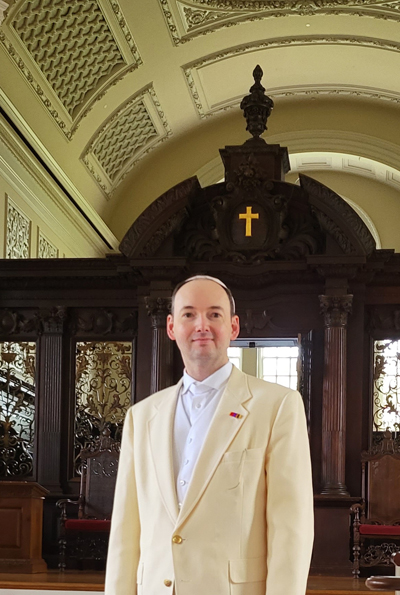
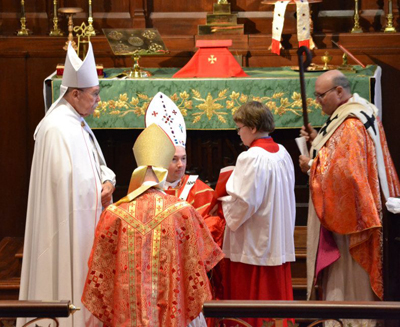
H.A.H. Pope Radislav I of Rome-Ruthenia at the Memorial Church, Harvard University
The Roman-Ruthenian Church affirms itself as the rightful temporal successor of St. Peter, carrying the historical and documented patrimony of Rome and Russia through St. Leo X, with full Orthodox and Catholic autocephalous authority — equal to the Vatican, Constantinople, and other Patriarchates. It is the guardian of Latin Orthodoxy, the bridge between East and West, and the visible head of the Latin tradition in fidelity to the Orthodox and Catholic faith.
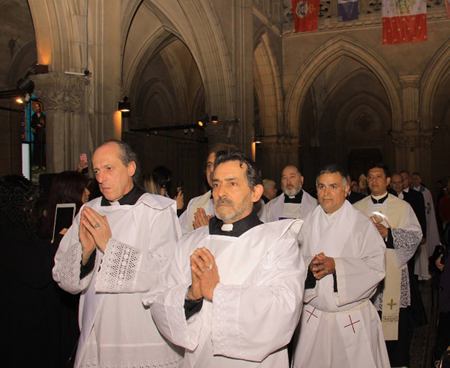
The Church’s mission does not seek civil rule. It is neither territorial nor expansionist, but custodial, protecting the undivided Church’s theological, liturgical, and cultural legacy. It embraces the harmony of conciliar Orthodox Christianity, integrating East and West without compromise or syncretism. From its Byzantine rites and Syriac influences to its Latin liturgy and apostolic governance, it serves as a living witness to the pre-Schism Church.
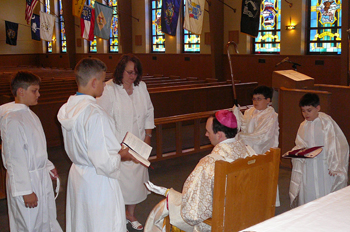
Indeed, the United Roman-Ruthenian Church does not oppose the existence of other churches, nor seek to dominate their structures. Rather, it offers itself as a sanctuary of continuity for those dislocated by theological rupture, ecclesiastical scandal, or spiritual displacement. In doing so, it fulfills not a partisan ambition, but a providential necessity.
As Radislav I of Rome-Ruthenia declares:
Declared by ecclesiastical decree and divine providence, the Roman-Ruthenian Pope-Catholicos, Radislav I, was quietly confirmed in 2014 as coadjutor to the Roman Pope by the Cardinal Dean, entrusted with full papal authority in the jurisdiction of the United Roman-Ruthenian Church. The results of this act slowly began to be revealed to the public in 2020. That confirmation was brought to full completion following the death of Pope Francis on 21 April 2025, the traditional founding date of Rome and the very day on which Radislav had been sacramentally confirmed into the Roman Church decades earlier. The convergence of these dates is not coincidence, but a divinely providential realignment.
H.A.H. Pope Radislav I of Rome-Ruthenia at the Memorial Church, Harvard University
The Roman-Ruthenian Church affirms itself as the rightful temporal successor of St. Peter, carrying the historical and documented patrimony of Rome and Russia through St. Leo X, with full Orthodox and Catholic autocephalous authority — equal to the Vatican, Constantinople, and other Patriarchates. It is the guardian of Latin Orthodoxy, the bridge between East and West, and the visible head of the Latin tradition in fidelity to the Orthodox and Catholic faith.
A Church, a State, a People
The Pontifical Imperial State of Rome-Ruthenia, a non-territorial ethno-religious nation without border, complements the United Roman-Ruthenian Church’s mission. It preserves the cultural, legal, and spiritual heritage of the Roman Empire, the Holy Roman Empire, Old Rus’, and the Holy Apostolic See of Saints Peter, Andrew, Stephen, and Mark.The Church’s mission does not seek civil rule. It is neither territorial nor expansionist, but custodial, protecting the undivided Church’s theological, liturgical, and cultural legacy. It embraces the harmony of conciliar Orthodox Christianity, integrating East and West without compromise or syncretism. From its Byzantine rites and Syriac influences to its Latin liturgy and apostolic governance, it serves as a living witness to the pre-Schism Church.
Indeed, the United Roman-Ruthenian Church does not oppose the existence of other churches, nor seek to dominate their structures. Rather, it offers itself as a sanctuary of continuity for those dislocated by theological rupture, ecclesiastical scandal, or spiritual displacement. In doing so, it fulfills not a partisan ambition, but a providential necessity.
A Voice for the Faithful
To the disillusioned, the traditional, and the faithful, clergy and laity alike, the United Roman-Ruthenian Church offers this message: the Apostolic Church is not lost. The truth endures.As Radislav I of Rome-Ruthenia declares:
“We
do not claim perfection. We claim only what was given to us: the
keys, the cross, and the promise that the gates of hell shall not
prevail.”
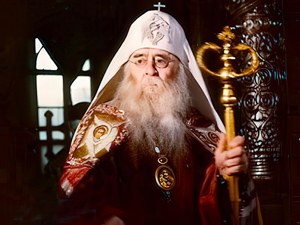
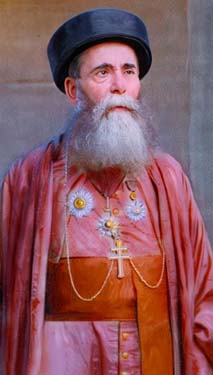
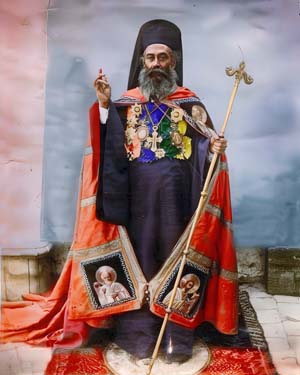
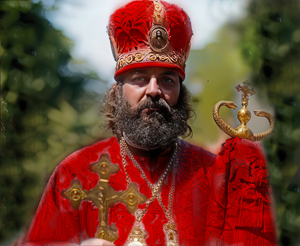
The immediate patriarchal ancestors of in apostolic succession
of the Roman-Ruthenian Pope:
Patriarchs Sergei of Moscow, Mar Yousef VI Emmanuel II of Babylon (Syrian), Damian I of Jerusalem, and St. Aftimios of America (one of the two Holy Fathers of the Holy Apostolic See). The United Roman-Ruthenian Church is a derivative patriarchate of these Russian, Syrian, Greek, and American patriarchates, as well as Rome as rightful temporal successor of St. Peter.
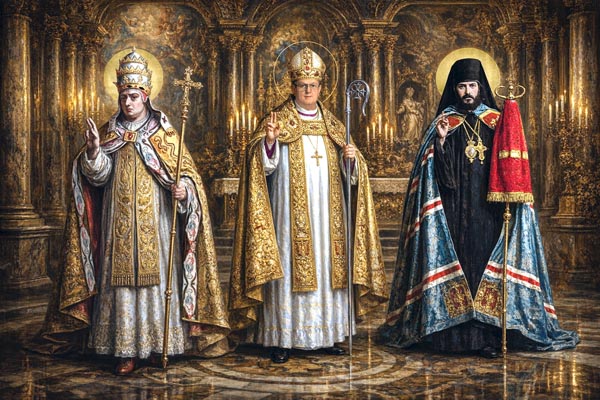
The Holy Fathers of the Apostolic See and
the Apostolic Founder
L-R: Pope St. Leo X, St. Edwin Caudill, Apostolic Founder and
Confessor, St. Aftimios Ofiesh
Image
Copyright 2026 United Roman-Ruthenian Church. All Rights Reserved.
Official Website of the United Roman-Ruthenian Church and the Pontifical Imperial State of Rome-Ruthenia
(also referred to as the Roman-Ruthenian Church and State)
Please be advised: any website or entity not listed below, or any unauthorized use of the names, titles, or symbols associated with the Roman-Ruthenian Church and State, is unofficial and not affiliated with the legitimate and singular Roman-Ruthenian Church and State.
Official Websites of the Church:
www.statopontificio.org
www.pontificalstate.org
www.catholicate.org
www.ilnunzioromano.org
Official Websites of the Prince-Bishop:
www.radislav.org
www.rutherfordjohnson.com
www.statopontificio.org/johnson-roma-rus